

24/7 Customer Service With AI: How Businesses
Can Stay Responsive Without Expanding Their Team
Customers no longer expect businesses to operate only during traditional working hours. Whether someone is searching for a dentist late at night, looking for an emergency home-service provider, trying to schedule a consultation, or simply asking a question about a company's services, they expect quick answers. A business that takes several hours to respond may lose that customer to a competitor that provides immediate assistance. This change in customer expectations is making 24/7 responsiveness an increasingly important part of business strategy in 2026. At the same time, most small and growing businesses cannot afford to keep large teams available around the clock. Hiring additional employees for evenings, weekends, holidays, and peak periods can significantly increase operating costs.
Why 24/7 Availability Matters More Than Ever
Customers do not organize their needs around a company’s opening hours. Someone may discover a business through Google at 11 p.m., submit a website inquiry during a lunch break, or call on a Sunday because they finally have time to deal with a problem. If the only response they receive is an automated voicemail asking them to call back tomorrow, there is no guarantee they will still be interested tomorrow.
This is particularly important for businesses where customers frequently compare multiple providers. A potential customer looking for a lawyer, dentist, HVAC company, salon, real estate agent, or other service provider may contact several businesses at once. The company that responds first has an opportunity to start the relationship before competitors do. Symagentic’s website focuses specifically on this problem, helping businesses automate customer interactions so that missed calls, delayed responses, and unanswered inquiries do not automatically become lost opportunities.


AI Can Become the First Point of Customer Contact
A modern AI customer-service system can act as the first layer of communication between a business and its customers. Instead of forcing every customer to wait for an employee, AI can answer frequently asked questions, explain services, collect customer information, identify the purpose of an inquiry, and determine what should happen next. For example, a customer visiting a dental website might ask whether new patients are accepted. An AI assistant can provide the answer and then ask whether the visitor would like to schedule an appointment.
A home-service customer might explain that their air conditioner has stopped working. The AI can collect the location, understand whether the request is urgent, and help move the customer toward booking a service. The interaction becomes more useful than a simple FAQ page because the AI can respond conversationally and guide the customer toward an actionable next step.
AI Chatbots Can Capture Website Leads Around the Clock
A website visitor does not always want to fill out a contact form. Sometimes they simply want an immediate answer before deciding whether to contact the company. This creates an opportunity for AI chatbots.
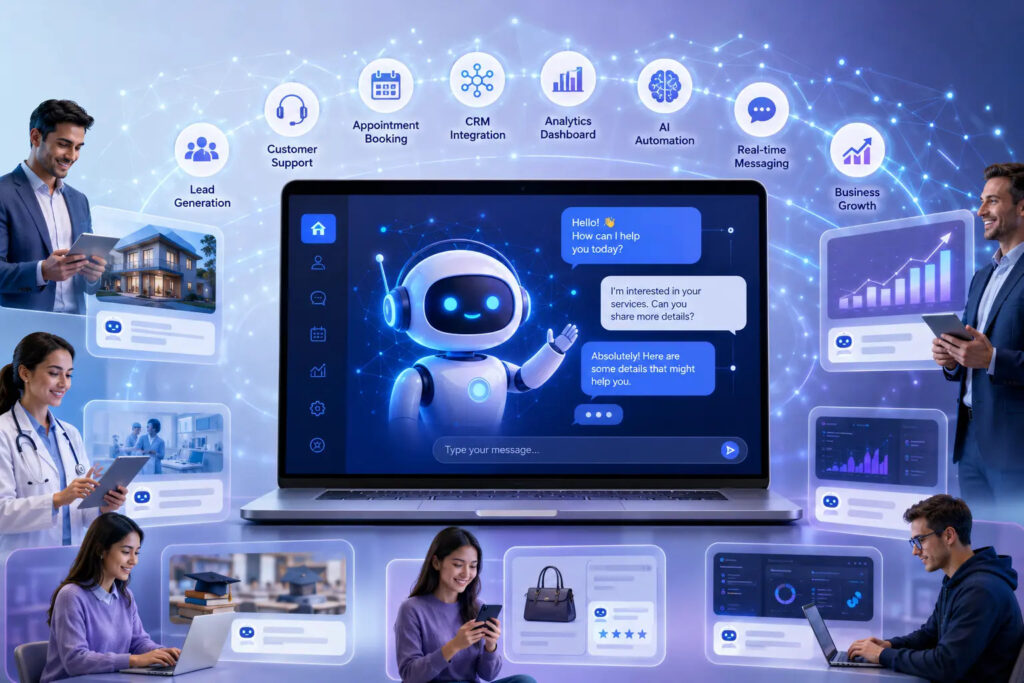
Symagentic’s SymaChat AI chatbot is designed to answer business-specific questions, capture lead information, assist with appointment booking, and escalate complex conversations to human team members with the conversation context included. This type of system can transform a website from a static information page into an active customer-engagement channel.
A visitor can ask a question, receive an immediate answer, provide their contact details, and potentially schedule an appointment without waiting for an employee to respond the following day. For businesses that receive significant website traffic, capturing even a small percentage of visitors who would otherwise leave without contacting the company can create meaningful additional opportunities.

AI Voice Agents Can Prevent Missed Calls From Becoming Lost Customers
Websites are only one part of customer communication. For many service businesses, the telephone remains one of the most important sources of new customers. The challenge is that calls frequently arrive when employees are already helping someone else.
A salon employee may be serving a customer when another person calls. A dentist’s receptionist may be assisting a patient at the front desk. An HVAC technician may be working at a customer’s property. A lawyer may be in a meeting. The call goes unanswered, and the potential customer may simply call another provider.
Symagentic’s AI Voice Receptionist and Missed-Call Text-Back service is designed to address this problem by answering routine calls, handling common questions, assisting with bookings, and sending an immediate personalized text when a call is missed. This creates a simple but powerful change: instead of treating a missed call as the end of the interaction, the business can use AI to continue the conversation.
Fast Lead Follow-Up Can Improve Conversion Opportunities
Getting a lead is only the beginning. Businesses also need to follow up. Unfortunately, manual follow-up is one of the easiest processes for teams to delay. Employees may intend to respond but become busy with other priorities. By the time they contact the prospect, the customer may already have selected another company. AI can remove this delay.
Symagentic’s AI Lead Follow-Up and Customer Nurturing solution can automatically engage new inquiries, ask qualifying questions, and continue conversations until a prospect is ready for the next step. Its product offering describes multi-channel lead capture, AI qualification, CRM integration, and routing of high-intent leads.
The important concept here is not simply automation. It is continuity. A customer who makes an inquiry should not have to start over every time they interact with a business. AI can maintain the context of the conversation and pass useful information to the employee when human involvement becomes necessary.